
Construction financing built around your draw schedule.
Construction lending is not term lending with a different name. The money arrives in stages, every draw is earned, and a structure that does not match your actual build schedule will starve the project at exactly the wrong moment.
Getting the draw structure right at the outset matters more than shaving basis points off the rate.
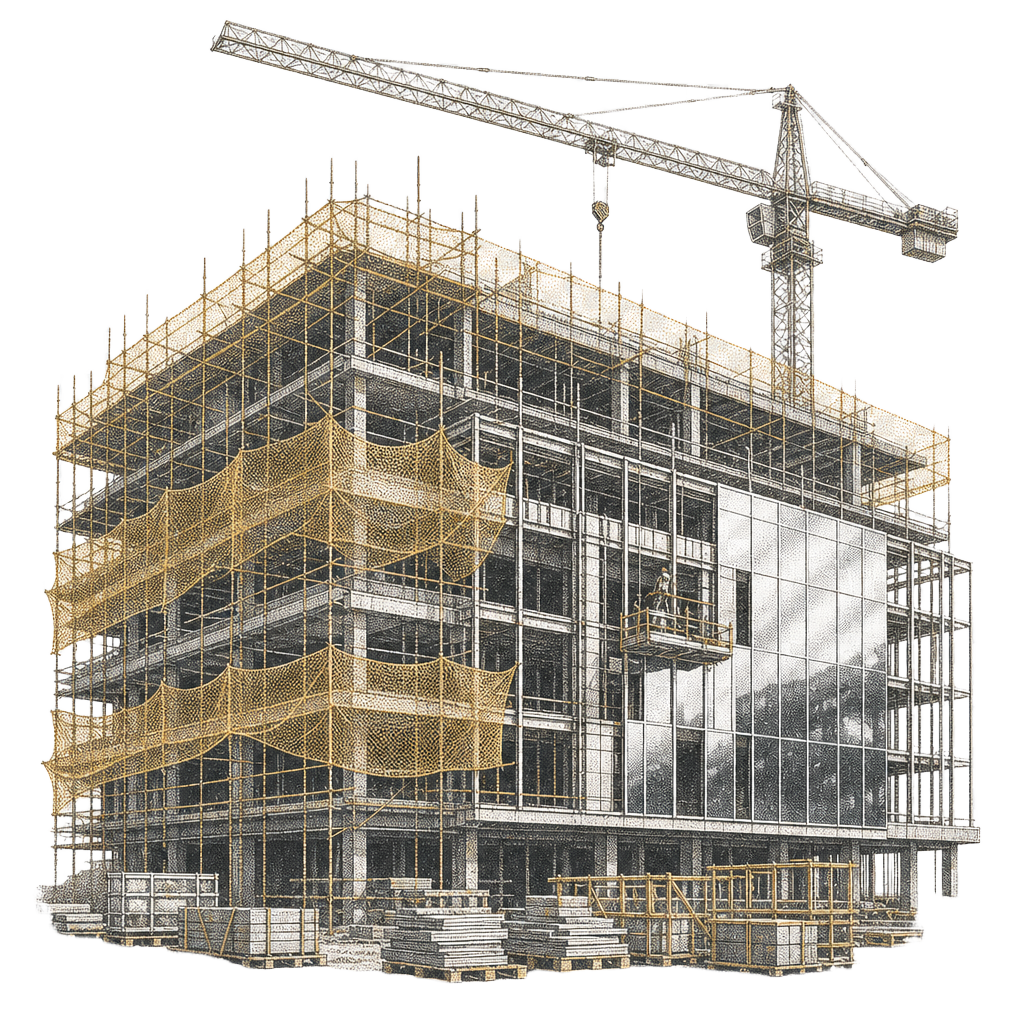
Construction projects we place across British Columbia.
- Ground up commercial and multifamily construction
- Purpose built rental development
- Value add and major renovation projects
- Land servicing and site preparation
- Construction takeout into multifamily term or insured financing
Four mechanics that keep the project funded.
Draws against progress.
Funds release as work completes, verified by a quantity surveyor or progress inspection.
Holdback.
A portion of each draw is retained against lien periods and completion.
Interest reserve.
Interest during construction is often capitalized into the loan rather than paid out of pocket.
Takeout planning.
The exit matters at application, not at completion. Lenders want to see how the construction loan gets repaid before they fund the first draw.
The package that gets funded first.
- Full project budget with a hard cost breakdown
- Construction schedule and draw projection
- Plans, permits and approvals status
- General contractor details and track record
- Pre leasing or pre sales where applicable
- Your development experience and financial capacity
The projects that get funded quickly are the ones where this arrives complete. The projects that stall are usually missing 2 or 3 of these and do not know it yet.
Loan to cost, not loan to value.
A finished building has a value. A hole in the ground has a budget. Construction lenders size the facility against total project cost, land included, and in British Columbia that usually lands between 65 and 75 percent of cost. The completed value matters, but mainly as a check that the takeout will be there.
Your equity goes in first. Lenders want the equity fully spent and documented before the first advance, so the facility funds the back end of the job while your capital carries the front. Interest during the build is normally capitalised into the loan through an interest reserve rather than paid out of pocket, which means the reserve is part of the budget and consumes part of the facility.
Current benchmark rates in British Columbia give you a sense of where construction pricing sits, since most facilities float off prime.
Why lenders care about the 10 percent.
The BC Builders Lien Act requires a statutory holdback of 10 percent on the value of work and materials under each progress payment. It is not negotiable and it cannot be contracted away.
Liens can be filed for 45 days from the date on the certificate of substantial completion, so the holdback is normally released at day 55 after a clear title search through the Land Title and Survey Authority.
Practically, that is real money sitting out of the project for months. Lenders size the facility knowing the holdback exists and knowing when it releases. A developer who has not budgeted for that carry finds out at the end of the build, when the trades want paying and the last 10 percent is still locked up, rather than at the start when it could have been planned for.
Conditions that come before advance one.
- A fixed price or guaranteed maximum price contract wherever the job allows one
- A cost consultant or quantity surveyor appointed to certify every draw
- The full construction budget carrying a contingency of roughly 7 to 10 percent of hard costs
- Proof the equity is in, spent and documented
- Building permit in hand, not pending
- Course of construction insurance in place before work starts
Our deal submission checklist sets out what to send before any of this becomes urgent, and how construction draws actually work walks through the mechanics draw by draw.
Strata and rental are underwritten differently.
On a strata project the presale package is the exit. Lenders look for a meaningful share of units sold with hard deposits and firm contracts, deposits held properly in trust, and purchasers who can actually complete. Soft or conditional sales carry very little weight.
A purpose built rental project has no sales to count, so it is underwritten on the stabilised value and the strength of the takeout instead. That difference decides which lenders will even open the file: some will not touch a strata build below a presale threshold, others prefer rental precisely because the exit is an insured takeout rather than a sales program.
Where the presale or takeout picture is not settled yet, bridge and land financing often carries the site until it is.
Four failures we see repeatedly.
Budgets without real contingency.
A budget with a token contingency line reads as optimism to an underwriter. When the first change order lands, the shortfall is yours to fund and draws stop until you do.
Draw requests without certification.
A draw submitted without the cost consultant sign off, updated lien search or matching invoices does not get funded. Payments stall, trades stop showing up, and the schedule slips for a paperwork reason.
No takeout arranged before maturity.
Construction facilities are short. If the term or insured takeout is not underway well before maturity, you are refinancing under pressure at whatever the market offers that week.
Cost escalation between pricing and start.
Numbers priced 8 months before breaking ground rarely hold. Lenders test the budget against current pricing, and a stale budget shrinks the facility or delays the approval.
Construction financing questions we hear most.
Where we finance this in British Columbia
Let's look at your project.
Send us the budget, the schedule and where the project sits today. We will tell you what structure it will support.