
CMHC MLI Select financing for rental housing that earns its leverage.
MLI Select is CMHC's points based insurance program for rental housing of 5 units or more. Commit to affordability, energy efficiency or accessibility outcomes, earn points, and the points buy real financing advantages: leverage up to 95%, amortizations up to 50 years, reduced insurance premiums and, at the top tier, limited recourse.
The catch is that the commitments are binding, the scoring is technical, and the application is unforgiving of weak files. The difference between a 50 point and a 100 point structure on the same building is often millions in loan proceeds, which makes how the file is put together the whole game. Insured pricing sits well inside conventional commercial pricing, and you can see where the benchmarks are today on our BC rates page.
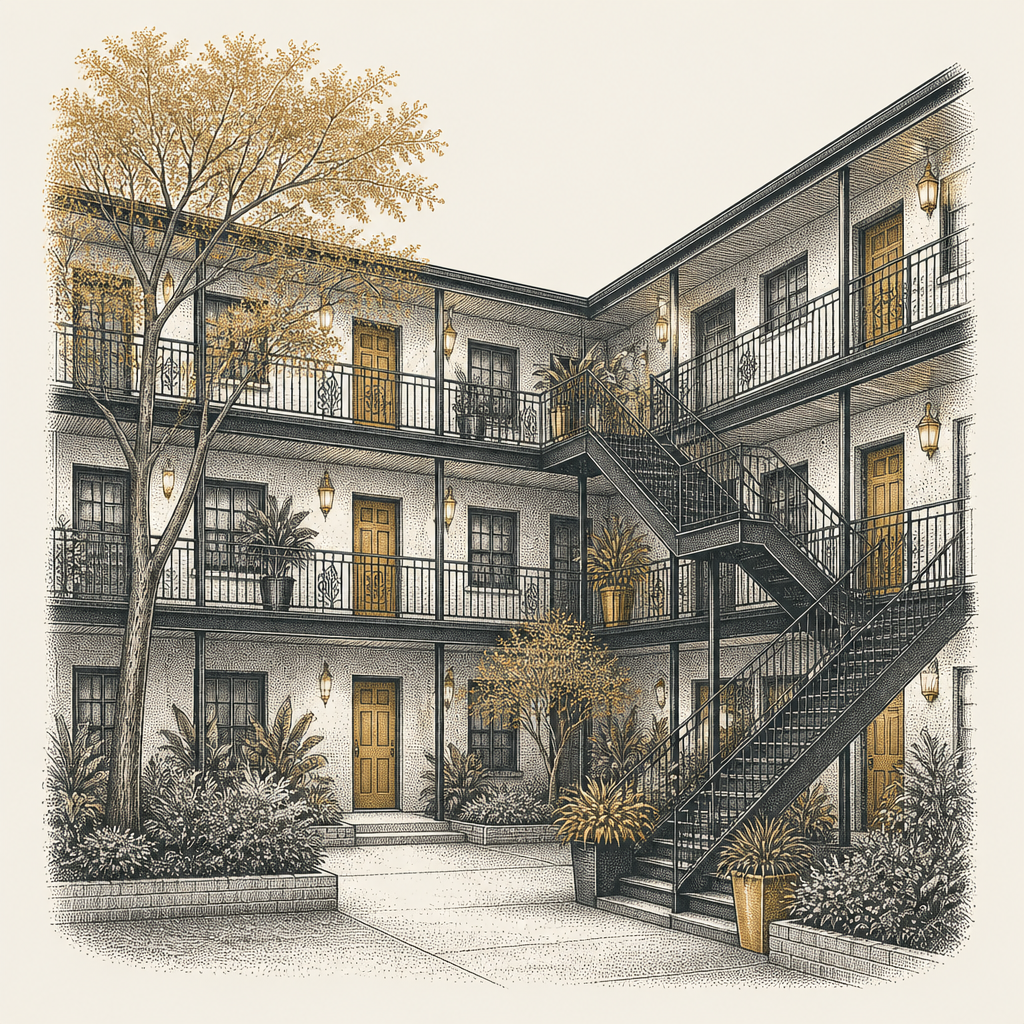
Three ways to score. Fifty points to qualify.
Points come from three categories, and they stack. You need at least 50 to qualify.
Affordability.
The heavyweight category. Points are earned by committing a share of units to rents at or below 30% of the median renter household income for the market, held for at least 10 years. For existing buildings: 40% of units earns 50 points, 60% earns 70, 80% earns 100. For new construction the thresholds are much lower: 10% of units earns 50 points, 15% earns 70, 25% earns 100. Extending the commitment to 20 years adds 30 points.
Energy efficiency.
For existing buildings, points follow the reduction in energy use and emissions: 15% earns 20 points, 25% earns 35, 40% earns 50. For new construction, performance is measured against the national energy code baseline: roughly 25% better earns 20 points, 50% better earns 35, 60% better earns 50. Certified energy modelling is required, this is where files most often go sideways.
Accessibility.
20 points for meeting accessibility standards across a share of units, 30 at the higher threshold, using CSA/universal design criteria. Rarely carries a file alone, but often the cheapest 20 points on the board.
The tiers, side by side.
| Feature | 50+ points | 70+ points | 100+ points |
|---|---|---|---|
| Max amortization | 40 years | 45 years | 50 years |
| Insurance premium discount | 10% | 20% | 30% |
| Leverage | Up to 85% | Up to 90% | Up to 95% |
| Recourse | Full | Full | Limited recourse available |
| Minimum debt coverage | 1.10 | 1.10 | 1.10 |
Leverage limits vary by transaction type, new construction, purchase or refinance, and a premium surcharge of 0.25% applies for each 5 year amortization band beyond 25 years. The tier numbers above are ceilings; what a specific building achieves depends on how the file is structured.
What MLI Select looks like in British Columbia.
BC land values are high enough that most files are not constrained by the 95% leverage ceiling at all. They are constrained by debt service coverage. A Vancouver or Burnaby project frequently lands well below the headline number, because the rents the building can actually charge will not carry a loan that large. A Fraser Valley or Interior project, where the price per door is lower against similar rents, gets much closer to it.
The binding test is the lower of two numbers: the leverage cap your points earn, and what a 1.10 debt coverage supports at the rents the building can achieve. This is the single most common surprise on BC files, and it is the reason we model proceeds before anyone gets excited about 95%. Where a higher tier needs energy work to reach it, CleanBC and BC Hydro incentives can offset part of that upgrade cost, which sometimes changes the answer.
What goes wrong on MLI Select files.
Energy modelling left to the end.
The energy report is treated as paperwork instead of design input, and it arrives after the drawings are frozen. Modellers unfamiliar with CMHC's attestation standards produce reports that score lower than the building deserves, or get sent back. Bring the modeller in at concept stage, not at submission.
Affordability rents the building cannot live at.
Rents get committed at levels that only work on a spreadsheet with no vacancy and optimistic operating costs. Once real vacancy, turnover and expenses land, the building is locked into rents it cannot fund itself on. The commitment lasts ten years or more, so it has to survive a bad year.
Rent roll evidence that does not survive the appraisal.
Market rent assumptions get built from listings rather than from signed leases and comparable transactions. The appraiser uses the second set, the value and the achievable rents come in lower, and the loan resizes late in the process. Evidence quality decides proceeds.
Timelines built as though CMHC is a formality.
Subject removal dates and construction starts get set against a conventional financing calendar. CMHC review is a real underwriting process with its own queue, and a file that goes back for clarification loses weeks. Build the schedule around the insured timeline, or bridge to it.
Timelines and what to expect.
A complete MLI Select application typically runs 3 to 5 months from engagement to funding. CMHC review alone commonly takes 8 to 12 weeks once the file is submitted, and that clock only starts when the submission is genuinely complete. Construction takeouts add the rental achievement period on top, because the insurance is finalised against occupancy the building has actually reached.
Anyone promising a materially faster insured close is describing a bridge, not MLI Select. That is a legitimate structure and we use it often: close on bridge financing to hold the deal, then take out into the insured loan once CMHC has run its course. What it is not is a faster MLI Select.
September 30, 2026: the energy scoring window closes.
Until September 30, 2026, CMHC accepts energy attestations under the older 2015 National Building Code and 2017 energy code baselines. After that date, all new applications are scored against the 2020 codes, which are themselves more efficient, meaning the identical building design earns fewer energy points. Projects already in design that submit before the deadline lock in the more favourable scoring. Projects starting later should be modelled against the 2020 baseline from day one, and underwritten to work at the 70 point tier in case the 100 point tier is out of reach. In BC, CleanBC and BC Hydro incentives can offset a meaningful share of the upgrade costs needed to buy the points back.
Same building, different equity cheque.
An illustration, not a quote, every file prices differently.
$6,000,000 existing rental acquisition
- $4,500,000 loan
- $1,500,000 equity required
- 25 to 30 year amortization
- Market pricing
$6,000,000 existing rental acquisition
- $5,700,000 loan
- $300,000 equity required
- Up to 50 year amortization
- Insured pricing with premium discount
Five times less equity in the deal, materially lower debt service through the longer amortization, in exchange for binding commitments CMHC monitors for the life of the agreement. Whether that trade makes sense is a modelling exercise, and it is the first thing we run.
From rent roll to commitment.
Score the building.
We model all three categories against your rent roll and capital plan and tell you which tier is realistically reachable.
Structure the commitments.
Affordability math, energy scope and timing are set so the points survive underwriting, not just the marketing deck.
Package and place.
Full CMHC submission through the lender best matched to the deal, with the rental achievement and documentation standards handled.
Close and comply.
Funding, then the compliance calendar for the commitment period so there are no surprises at renewal.
MLI Select questions we hear most.
Go deeper on the program
Where we finance this in British Columbia
Let's score your building.
Send us the rent roll or the pro forma. We will tell you which tier the building can reach and what the points are worth in proceeds.