
Multifamily financing for apartment buildings across British Columbia.
Rental buildings are the most financeable asset class in Canadian commercial real estate. Lenders understand them, insurers support them, and pricing reflects that.
The gap is usually not appetite. It is packaging. A file that arrives with a clean rent roll, defensible operating numbers and the right lender pairing gets terms that a scattered submission never sees.
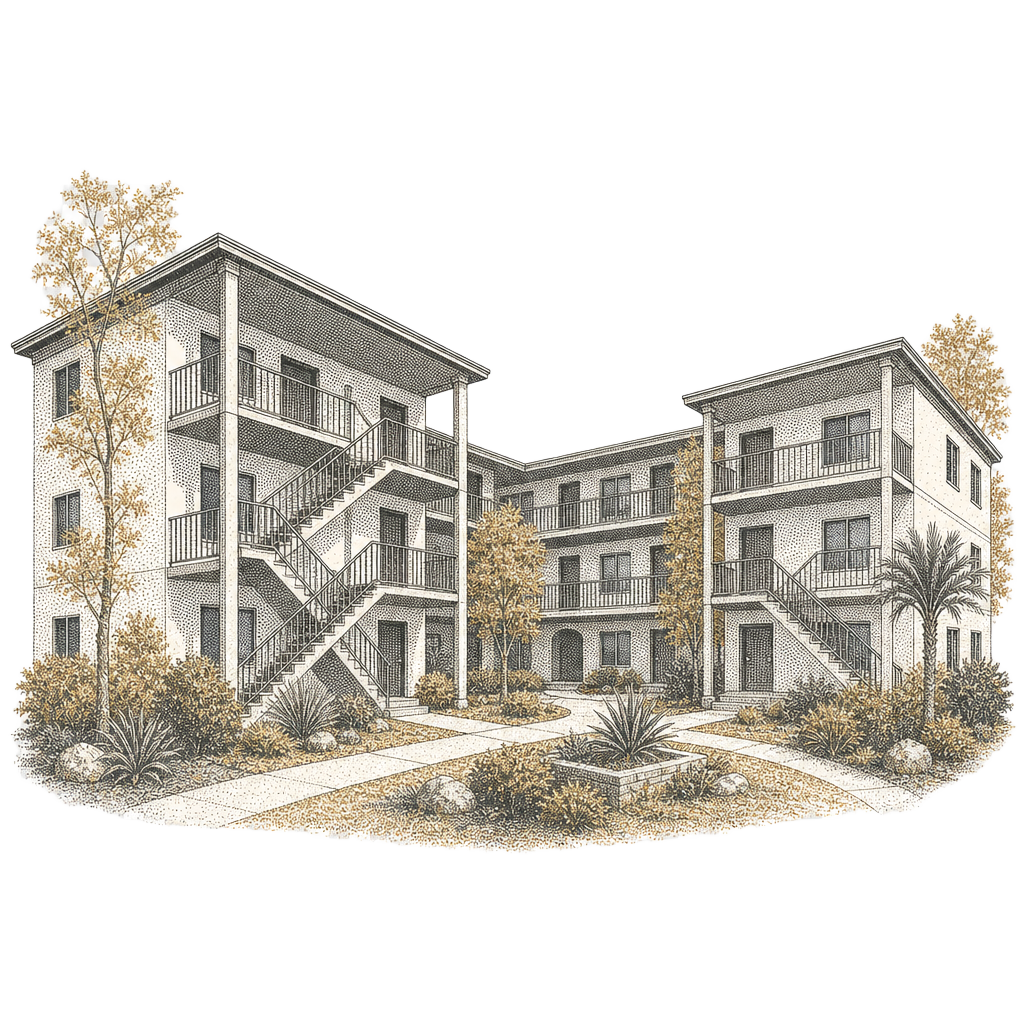
Rental deals we place every week.
- Acquisition of existing rental buildings
- Refinance of stabilized propertiesincluding equity takeout
- CMHC insured financing through MLI Select and MLI Standard
- Construction takeout on newly completed rental
- Portfolio and multi property structures
Four things that decide your terms.
The rent roll.
Actual rents against market, tenant mix, vacancy and turnover history.
Debt service coverage.
Net operating income against the proposed payment. This is the number that sets your loan amount more than the purchase price does.
How DSCR sets your loan amount →The property itself.
Age, condition, deferred maintenance and capital expenditure required.
You.
Track record operating similar assets, net worth and liquidity behind the deal.
Two paths, run side by side.
CMHC insured financing gives you higher leverage, longer amortization and better pricing. It also takes longer and carries commitments.
Conventional financing closes faster with fewer strings, at lower leverage and higher cost.
Neither is automatically right. It depends on your hold period, how much equity you want to leave in, and how quickly you need to close. We run both paths before recommending one.
The trade is proceeds against time.
Insured financing gives you more proceeds, a longer amortization and cheaper pricing, because the lender's exposure is covered. The cost is months of process and commitments that run with the building, on affordability, energy performance or accessibility depending on the program. CMHC MLI Select is where most of that opportunity sits today.
Conventional is faster and cleaner. No insurer in the file, no commitments attached to the property, and a close measured in weeks rather than months. You pay for that with lower leverage and a shorter amortization, which means more of your equity stays in the deal.
Insured points the right way when you are holding long term, when the extra proceeds fund the next acquisition, when the building scores well on the program criteria, or when coverage rather than value is capping your loan. Conventional points the right way when the closing date is firm and near, when the building is being repositioned and sold within a few years, or when you do not want commitments binding a property you intend to trade.
Value sets the ceiling. Coverage sets the number.
Loan to value gives you a maximum. What you actually get is almost always decided by debt service coverage: net operating income divided by the annual debt service on the proposed loan. Lenders generally want 1.20 to 1.25 on conventional multifamily and 1.10 on insured, and the loan is sized backwards from whichever test bites first.
That is why amortization matters so much here. Stretching the amortization lowers the annual payment, which lifts the coverage ratio, which lifts the loan the same income supports. On most rental files a longer amortization buys more proceeds than a sharper rate does.
How DSCR sets your loan amount works through the arithmetic, and the calculator sizes a building the way an underwriter would.
Turnover is the value add story here.
Much of British Columbia's purpose built rental was built in the 1960s and 1970s. Those buildings trade well below replacement cost, and they usually carry rents well below market because the tenancies have been in place for years.
British Columbia caps the annual rent increase on an existing tenancy at a level the province sets each year. Rents reset to market when a unit turns over. That single structural fact is why turnover rates and unit condition drive the value add case in this province far more than they do where rents can be raised on sitting tenants.
Before a lender will fund against post renovation rents rather than current ones, it wants three things: the renovation budget priced properly, the turnover schedule showing when units realistically become available, and evidence the target rents are real, meaning comparable renovated units in the same market actually achieving them. Without that evidence the file gets underwritten on today's rent roll and the proceeds come in short.
The five documents that decide it.
The rent roll, reconciled.
Every line matched to an executed lease. Gaps between what the rent roll says and what the leases say get underwritten at the lower number.
Trailing 12 month operating statements.
Actual income and expenses, not a pro forma. Lenders normalise vacancy, management and maintenance whether or not you pay for them today.
Capital expenditure history.
What has been replaced, what has not, and what the building will need in the next 5 years. Deferred maintenance comes off value or gets held back.
Unit mix.
Bachelor, one bedroom and family sized units rent and re let differently, and the mix drives both the income durability and the appraisal comparables.
Your experience.
Rental operations are a business. A sponsor who has run similar buildings gets better terms than one who has only owned houses.
Multifamily questions we hear most.
Where we finance this in British Columbia
Let's look at your building.
Send us the rent roll and the location. We will tell you what the building will support and which lender path fits.