
Financing land inside the Agricultural Land Reserve
British Columbia protects farmland through a provincial reserve, and that protection is the first thing a lender reads.
The short answer
Land inside the Agricultural Land Reserve is financeable, but a lender is lending against restricted land, and the restriction is the whole story. What you may do with it is governed by the Agricultural Land Commission, not by your plans, and that ceiling on use is also a ceiling on value.
| What a lender checks | Why | What surprises buyers |
|---|---|---|
| Whether the parcel is in the ALR at all | The reserve boundary does not follow lot lines or zoning, so a parcel can be partly in and partly out | People assume rural means ALR and urban does not, and both assumptions are wrong |
| What the land is actually used for | A working farm, a bare parcel and a parcel with a residence are three different files | The house on the property may not be treated the way a residential lender would treat it |
| Whether anything you plan needs ALC approval | Subdivision and non farm use are not in the owner's gift | A plan the local government supports can still fail at the Commission |
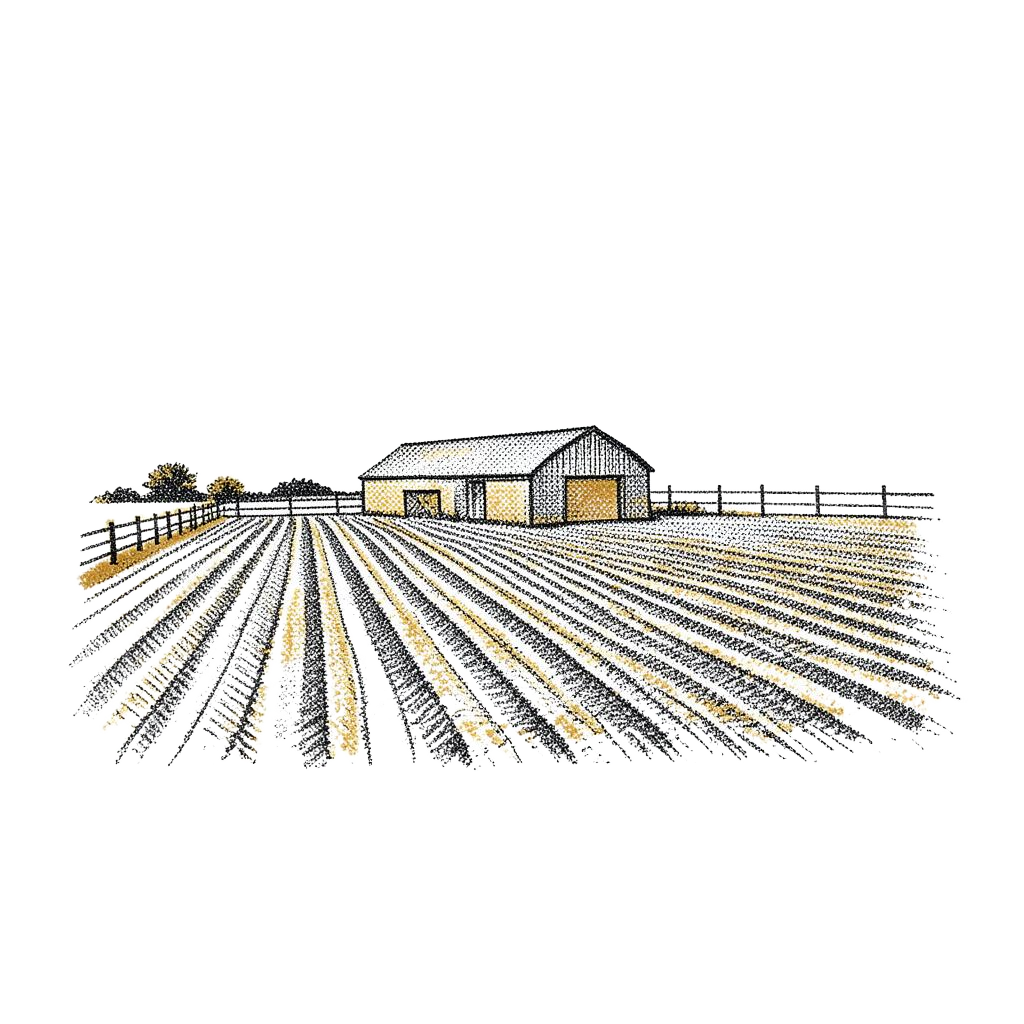
The Agricultural Land Commission sits above local government, and that is the point
Land in the ALR cannot be subdivided unless the Agricultural Land Commission specifically allows it or a regulation permits it, and an approving officer cannot authorise an ALR subdivision under the Land Title Act or the Strata Property Act without that approval, so the Land Title Office cannot register the new parcels either.
Read that as a financing rule rather than a legal curiosity. A lender underwrites what the land can legally be used for today, not what an application might one day permit. Municipal support, a planner's encouragement and a council resolution are all real, and none of them creates a parcel that can be registered without the Commission.
The consequence for pricing is direct. A purchase whose value depends on an ALC decision is a speculative file rather than a land file, and lenders treat it as one. They will lend against the land as it stands, so if you are paying a price that already assumes the decision goes your way, the gap between the two numbers is your equity and your risk. Whether a particular application is likely to succeed is a question for a lawyer or an agrologist who does this work, not for a mortgage broker.
Why the lender list is shorter
Most conventional commercial lenders are built around income producing property. They have a coverage test, an appraisal method and a credit process shaped by leases and rent rolls. Agricultural land does not present that way. The income is seasonal or absent, the value rests on farm use rather than on a tenancy, and the resale market for a specific parcel can be thin.
So the lenders who do this well are the ones that do it often. Agricultural specialists such as Farm Credit Canada underwrite farm assets as their core business. Credit unions with genuine farm books in the Fraser Valley, the Okanagan and the Interior know the parcels, the crops and the operators. Beyond that, private capital takes the files where timing or a use question rules out everyone else. We describe the market as it is and we do not claim a relationship on any lender's behalf.
Where these deals actually get financed
Working farms with provable income. An operation with statements, a track record and a buyer for what it produces is a credit file as much as a land file, and it attracts the agricultural lenders on their normal terms.
Land purchases backed by strong outside covenant. Where the parcel itself carries little income, the borrower's balance sheet and other assets do the work. Lenders are candid about this. They are lending to you against land, rather than lending to the land.
Short term financing while a use question is resolved. Where an application is genuinely live and the exit is credible, a term measured in months rather than years can carry the property. That is the territory of bridge and land financing and, where the file needs more flexibility than a bank can offer, private and second mortgages.
When the honest answer is to wait
If the purchase price only works on a use that has not been approved, the risk sits with you. No lender will take it, and no structure moves it. The market prices ALR land on what it is, and the difference between that and what you are paying is not financeable at any leverage.
That is not always a reason to walk away. Sometimes the right answer is a longer subject removal period, sometimes it is more equity and a smaller loan, and sometimes it is waiting until the Commission has ruled. Send us the parcel and the plan and we will tell you which one you are looking at. A free deal review costs nothing and is a great deal cheaper than finding out after closing.
Agricultural land questions.
Related reading
Buying a parcel in the reserve?
Send the title, the parcel size and what you intend to do with it. We will tell you what the land supports before you write.