
Medical and dental office financing in BC
For practitioners buying or building the premises their clinic runs from, and for investors buying medical office buildings in British Columbia.
The short answer
Most BC practitioners who buy their clinic premises are financed as owner occupied commercial borrowers, where the practice's cash flow carries the mortgage, while investors in medical buildings are underwritten on tenant leases and covenant.
| Situation | How lenders look at it | What to bring | Where it goes wrong |
|---|---|---|---|
| Buying a strata clinic unit | Owner occupied, plus a review of the strata corporation | Practice statements, strata documents, depreciation report, bylaws | Bylaws that restrict clinical use, or a thin reserve fund |
| Buying a freestanding clinic building | Owner occupied, with the practice as the covenant | Practice statements, personal net worth, property details | Buying more building than the practice can carry |
| Building out a new clinic in space you own | Mortgage on the real estate, fit out funded separately | Contractor quotes, equipment list, practice statements | Assuming the mortgage will cover the fit out |
| Investor buying a medical office building with several practitioner tenants | Investment property, sized on the rent roll and leases | Rent roll, leases, operating statements | Leases rolling inside the mortgage term |
| Buying a practice together with its premises | Separate loans for the practice acquisition and the real estate | Purchase agreement, practice statements, property details | Treating it as one loan and missing the coordination |
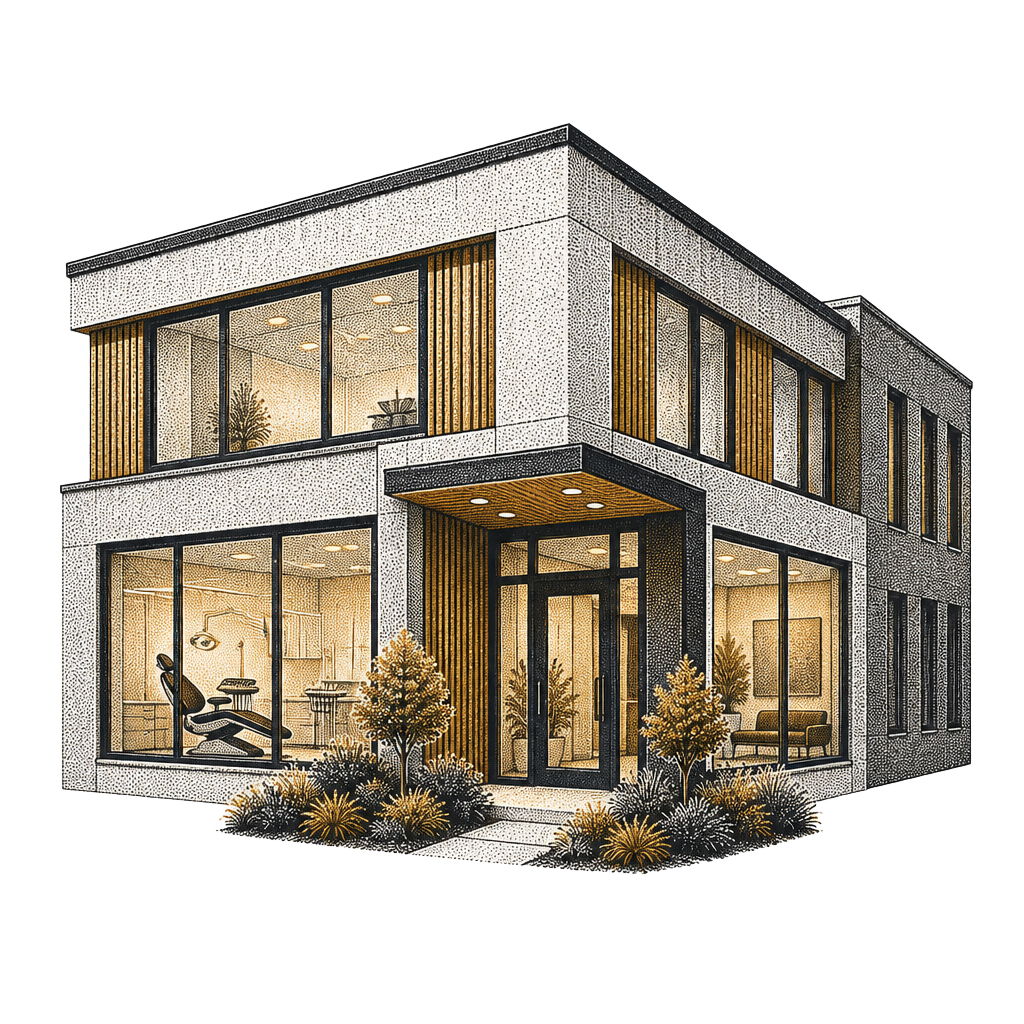
Why lenders like practitioners as owner occupiers
A clinic's income is professional and recurring. Patients come back, billings repeat, and the practice's statements show a lender where the mortgage payment comes from.
The build out is specialised, so practitioners tend to stay put. Moving a dental or medical clinic is expensive and disruptive, which makes an owner occupier unlikely to walk away from the space.
And the borrower usually has a long licensed career ahead. Lenders read that as a steady covenant, which is why practitioner files tend to underwrite cleanly. The wider logic is set out on the owner occupied commercial mortgage page.
Strata clinic units
Many clinics in BC run from strata units. The lender reviews the strata corporation as well as your unit: the strata documents, the depreciation report and the permitted use in the bylaws, because a bylaw that restricts clinical use can make the unit hard to resell.
The full checklist is on our strata and leasehold commercial property page.
Leasehold improvements and equipment
The fit out of a clinic, meaning plumbing, operatories and imaging rooms, is usually funded separately from the mortgage. It adds value to the practice more than to the building, so mortgage lenders give it little weight.
One route is the federal Canada Small Business Financing Program. This is a federal program delivered through participating lenders, not by CCM directly. Businesses operating for profit in Canada with gross annual revenues of 10 million dollars or less are eligible. The maximum for a borrower is 1.15 million dollars, of which up to 1 million dollars can be a term loan for purchasing or improving land and buildings used for commercial purposes, with no more than 500,000 dollars of that available for equipment and leasehold improvements and no more than 150,000 dollars for intangible assets and working capital.
Program terms are set by the federal government and can change, and eligibility is confirmed by the lender rather than by us. More on how it fits owner occupied purchases is on the owner occupied commercial mortgage page.
Buying a practice and its building together
The practice purchase itself, meaning the patient base, goodwill and equipment, is business acquisition lending. It is usually done by a bank's professional practice team, not by a commercial mortgage lender.
We arrange the real estate side and coordinate with that lender, so both approvals line up for the same closing.
Investing in medical office property
An investor buying a medical building is underwritten like any office investment. Lenders read the rent roll, the lease terms and the tenant mix. A single tenant building is judged on that one tenant.
Specialised fit outs cut both ways. They keep tenants in place, but if a tenant leaves, re leasing can be slower because the next user may need different space. See office building financing for how lenders size these loans, and test a number on the commercial mortgage calculator.
When to wait
A new practice with no billing history may do better leasing first and buying once it has statements a lender can read. Buying too early can mean a smaller loan, more equity or a more expensive lender.
A strata unit with weak strata documents is worth walking away from. Problems in the strata corporation become your problems at renewal and at resale.
Medical and dental office questions.
Related reading
Let's fund your next deal
Send the practice statements and the property details. We will tell you how lenders will read the file before you commit.