
Strata and leasehold commercial property in British Columbia
Two ownership forms this province produces in volume, and a lender reads both differently from a freehold building.
The short answer
Two ownership forms that are ordinary in British Columbia and unusual elsewhere, and both change how a lender looks at the file. With strata, the lender underwrites the corporation as well as your unit. With leasehold, the remaining term of the ground lease sets the outer limit of the mortgage.
| Ownership form | What the lender adds to the review | What can stop a file |
|---|---|---|
| Strata commercial | Strata documents, the depreciation report, the contingency reserve fund and recent council minutes | A pending special levy, litigation, or a reserve fund that will not cover known work |
| Leasehold | The ground lease itself, its remaining term, its rent review mechanism and its assignment terms | A remaining term that does not run well past the amortization |
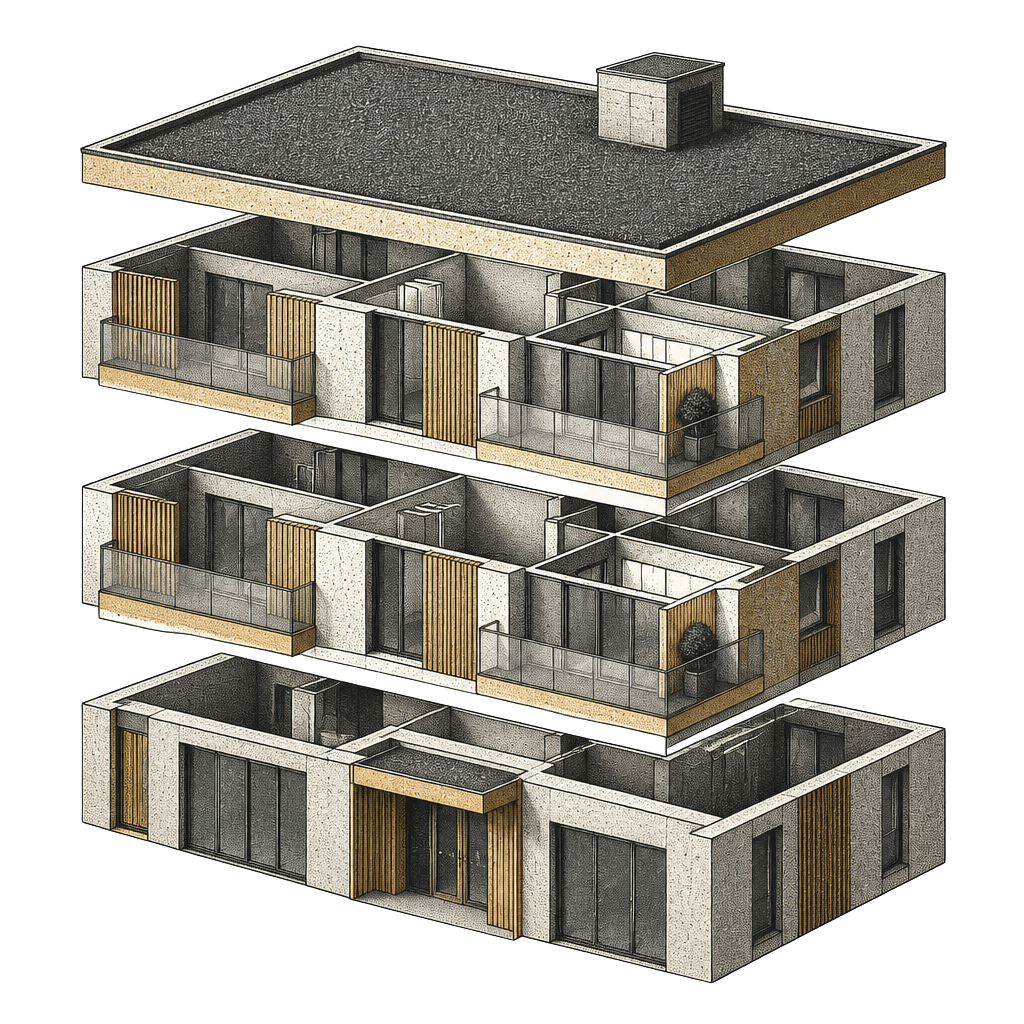
Strata commercial, what the lender is actually reviewing
Buying a strata unit means buying into a corporation whose finances you do not control. Your roof, your parkade and your building envelope are collective responsibilities decided by an owners group and a council, and a decision made by other owners can land on your unit as a bill. A lender knows this, so it reads the corporation before it reads you.
In practice that means the depreciation report and what it says about the remaining life of major components, the contingency reserve fund and whether it is anywhere near the cost of the work the report predicts, recent council minutes for anything being discussed but not yet approved, the strata bylaws for restrictions on use and on leasing, and any current or threatened litigation. A healthy reserve fund makes a file easier for a straightforward reason: the money for the next roof already exists, so the lender is not underwriting a levy that has yet to be announced.
There is also a practical point about size. Strata units are smaller loans, and the fixed costs of a commercial file do not shrink with the loan, so some lenders will not look at them at all. The practical minimum discussed on the deal sizes we place applies here too. The work is knowing which lenders in British Columbia are genuinely active on strata commercial rather than nominally open to it.
Leasehold, why the lease term is the ceiling
On a leasehold interest, someone else owns the land. What you own, and what the lender takes security over, is the right to occupy it for the balance of a ground lease. That single fact sets the outer limit of the financing, because a lender needs the remaining term to run well past the amortization of the mortgage. When the lease ends the security ends with it. How much runway a lender wants varies from lender to lender, so it is worth asking early rather than assuming.
Two mechanics matter beyond the term. The first is consent and assignment. The ground landlord usually has to consent to a mortgage of the leasehold interest and to any future assignment on a sale, and most lenders will also want notice rights so they hear about a default under the ground lease before the lease is at risk. That consent process takes time and is often the longest item in the file.
The second is rent. A prepaid lease, where the ground rent was paid up front for the full term, behaves very differently from one with ongoing rent and periodic review. Be clear eyed about a rent review that falls inside the mortgage term: it is a real risk, because the payment obligation can step up while the mortgage payment stays fixed, and a lender will price for that or size the loan below where the current rent alone would take it.
Where these show up in British Columbia
Strata office and strata industrial are ordinary here. Business parks across Metro Vancouver and the Fraser Valley are commonly built and sold as strata bays, so a small manufacturer, a trades contractor or a professional firm buying its own premises is usually buying a strata unit rather than a building. Anyone who has financed commercial property only in other parts of Canada tends to be surprised by how normal this is.
Leasehold interests turn up wherever land is held by a public body rather than sold. That includes municipal and provincial land, port lands, airport lands and land held by First Nations. Leases on First Nations land are financeable and are routinely financed. The lender list is shorter rather than absent, and the lease terms and the consent process drive the timeline more than the building does.
Both forms show up across our British Columbia markets, and both are more common in industrial property than owners expect.
Getting ahead of it
Order the strata documents early. They take time to produce, and the useful ones, the depreciation report and the last two years of minutes, are exactly the ones that arrive last. Read the ground lease before you remove subjects, not after, because the consent clause and the rent review clause can change what the property is worth to you.
Then give both to your broker at the start rather than at the end. On these files the documents decide which lenders can participate, so producing them late means running the search twice. The deal submission checklist covers everything else a lender needs alongside them.
Strata and leasehold questions.
Strata unit or leasehold interest?
Send the strata documents or the ground lease with the property details. We will tell you which lenders can work with it and what the documents change.