
Financing several properties under one mortgage
A blanket mortgage is a consolidation tool. It is powerful when you are holding and awkward when you are trading.
The short answer
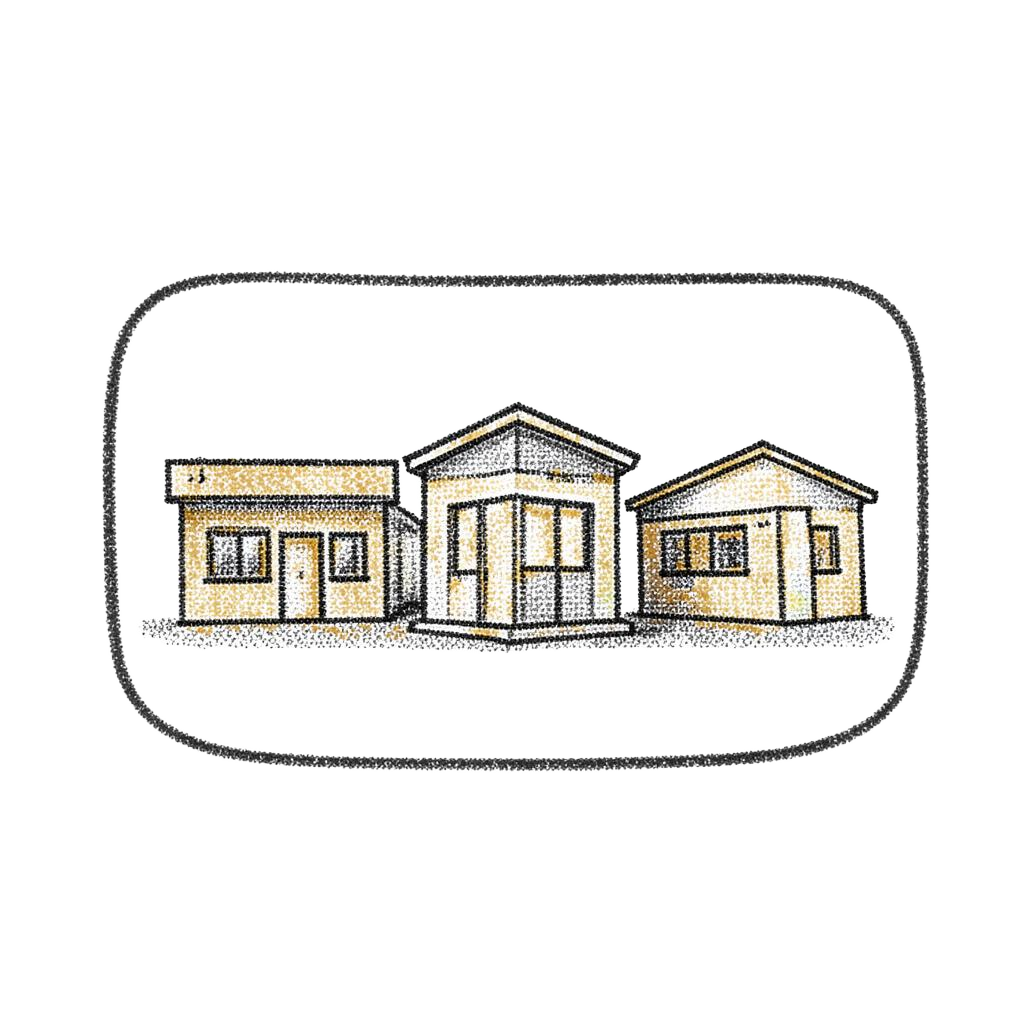
A blanket mortgage secures one loan against more than one property. It can raise proceeds and simplify a portfolio, and the cost is flexibility, because selling or refinancing any single property in the pool needs the lender's cooperation.
| What you gain | What you give up | Who it suits |
|---|---|---|
| One loan and one set of costs instead of several | One maturity date across the whole pool | Owners with several small properties where individual loans are uneconomic |
| Cross collateralised strength, so a weak property can be carried by a strong one | A partial discharge clause you have to negotiate up front, or you cannot sell one property | Investors holding a mixed quality portfolio |
| Higher total proceeds than the same properties financed separately | Every property is exposed to a default on any part of the loan | Owners consolidating rather than trading |
The partial discharge clause is the whole negotiation
Every property in the pool sits under the lender's charge. To sell one, that charge has to come off that title, and the only clean way that happens is if the loan document already says how. That provision is the partial discharge clause, and it is the difference between a portfolio you can manage and a portfolio you are locked inside.
A good clause does two things in principle. It sets out a mechanism, so a sale triggers a defined process rather than a fresh negotiation. And it sets out the paydown, so you know before you list what proportion of the sale proceeds goes against the loan and what conditions the remaining pool has to satisfy afterwards, usually a coverage or leverage test on what is left.
None of that is available later. It is agreed at commitment, alongside every other term you will be living with. The same logic runs through commercial prepayment penalties, where the cost of getting out is written at the start and cannot be argued down at the end.
Cross collateralisation cuts both ways
The reason a blanket can raise more money is that the lender is not testing each building on its own. A property with thin coverage, a vacancy problem or a short lease can be carried inside a pool where the other assets are strong. That is a genuine advantage and it is why owners with mixed quality portfolios use the structure.
Here is the other side, stated plainly. There is one loan, and a default under that loan is a default against every property securing it. A single bad asset does not stay contained. The lender's remedies reach the whole pool, including the buildings that never had a problem. If you would not be comfortable putting a good building at risk for a weak one, do not put them in the same loan.
When separate mortgages are the better answer
If you intend to sell any of them inside the term. A property you plan to trade does not belong in a pool. Even with a good discharge clause you are adding a lender approval to a transaction that did not need one.
If the properties are very different in type or quality. A mixed pool narrows the lender list and invites the lender to price to the weakest asset in it. Financed separately, the strong buildings can go to the lenders that like them.
If you want the option to refinance one on its own. Pulling equity out of a single building, or taking one to an insured structure, is simple with its own mortgage and complicated inside a pool.
The rule of thumb is short. A blanket is a consolidation tool, not a trading tool. If the plan is to hold and simplify, it earns its place. If the plan involves movement, finance the properties separately and pay for the flexibility. Raising equity across a portfolio without pooling the security is covered on our refinance and equity take out page.
Blanket mortgage questions.
Got several properties and too many maturities?
Send the list with rents and current debt. We will tell you whether pooling raises more than it costs you in flexibility.